
How Licensed Stylists Compare Wholesale Hair Suppliers Before Reordering
A low price is not enough if the next reorder arrives late, sheds differently, or leaves you chasing five vendors for one week of appointments. A better supplier check starts with the basics that protect margin and repeat bookings.

Key takeaways
What matters most before you change your routine
- A true wholesale program for stylists should verify professional credentials instead of offering the same pricing to everyone.
- Reorder consistency matters more than a strong sample because your reputation depends on what arrives month after month.
- Fast domestic shipping and a broad stylist-friendly catalog often save more money than the lowest headline unit price.
A supplier can look attractive on the first order and still become expensive later through inconsistent quality, slow restocks, or missing textures when your booking week is already full. That is why experienced stylists compare vendors on the second and third order experience, not just on the opening discount.
The safer approach is to review six practical checkpoints before you switch or reorder: professional access, consistency, shipping speed, catalog fit, sourcing clarity, and order flexibility. Once those pieces are visible, the cheapest-looking option often stops being the strongest business option.
$2K+ RAW HAIR HAUL 😱 | Vietnamese Bundles, Closures & Vendor Tea You Need to Know!
I just spent over $2000 on **100% Raw VietnameseHairbundles, closures, and frontals and I'm breaking it ALL down for you in ...
- Channel: Mari Jaay
Start by checking whether the pricing is actually built for professionals
A supplier that protects stylist pricing usually asks for a valid license or other professional proof before opening wholesale access. That requirement is useful because it shows the pricing model is meant for working beauty professionals instead of being a loose retail discount with a wholesale label on top.
If anyone can unlock the same price in one click, it becomes harder for you to protect margins when retail buyers and small resellers are shopping from the same sheet. The first checkpoint is simple: decide whether the program behaves like professional supply or like public promotion.
If the supplier never verifies who you are, treat the offer as a discount program first and a protected wholesale relationship second.
- Ask what proof is required before wholesale pricing is activated.
- Check whether the same prices are visible to non-professional shoppers.
- Favor vendors that keep pro pricing separate from normal retail browsing.
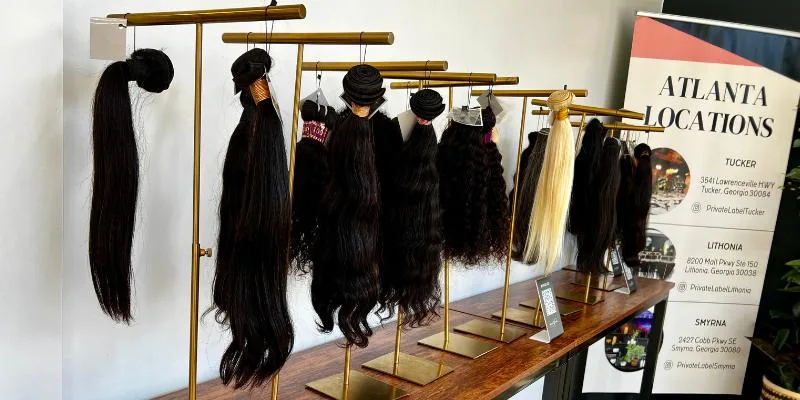
Judge the reorder pattern, not only the first sample
A sample order can confirm texture, feel, and packaging, but it does not tell you whether order number four will match order number one. Reorder consistency is what protects your install results, your consultation confidence, and the trust that keeps a client booking the next service without hesitation.
Ask how the supplier maintains inventory, whether the same product line stays on the same sourcing track, and how issues are handled if a reorder feels different. A vendor that answers clearly about repeat quality is usually easier to build a long-term buying routine around.
The real risk is not a bad sample. It is a later reorder that arrives looking close enough to ship but different enough to damage the result.
- Compare how the vendor describes quality control across repeat orders.
- Ask what happens when a reorder does not match expectations.
- Keep notes on shedding, tone, construction, and texture after each test order.
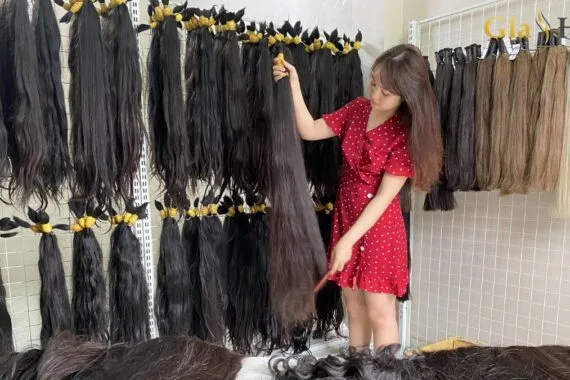
Compare shipping speed, stock depth, and order flexibility together
Stylists lose time and money when a supplier only works on a factory timeline. A lower unit cost does not help much if you have to wait weeks for a restock or tie up cash in inventory you do not need yet. For many salon owners and suite stylists, fast domestic inventory and small-order flexibility are part of the margin calculation, not a bonus feature.
This is also where minimum-order rules matter. If a supplier forces you into large quantities just to keep the price, the cost of carrying extra stock can wipe out the benefit of the lower per-piece number. A healthier vendor relationship lets you reorder on a booking rhythm that matches your real schedule.
Do not ask only which supplier is cheaper. Ask which supplier lets you restock on time without overbuying.
- Check normal ship times from the vendor's actual inventory location.
- Confirm whether wholesale pricing still applies on smaller routine orders.
- Look at how many weeks of stock you would need to carry under each vendor model.
Make sure the catalog and sourcing details fit the clients you already serve
A vendor is easier to work with when the catalog matches the installs you actually perform. If you need bundles, closures, frontals, wigs, or tape-ins across different textures, a narrow catalog can quietly push you back into multi-vendor ordering even when the core price looks fine.
Sourcing clarity matters for the same reason. You do not need a marketing story filled with origin terms. You need clear answers about human-hair quality, processing level, and what stays consistent from one order window to the next. That gives you stronger language in consultations and fewer surprises when clients ask what they are paying for.
The best supplier is not the one with the loudest claims. It is the one whose catalog, answers, and shipping rhythm fit your client mix with the fewest workarounds.
- List the textures, lengths, and install methods you sell most often before you compare catalogs.
- Ask direct questions about processing, product consistency, and replacement handling.
- Favor a supplier that reduces the number of side orders you need every month.
Frequently asked questions
What should stylists check first when comparing wholesale hair suppliers?
Start with professional access and reorder consistency. If the pricing is not protected for licensed buyers or the product changes too much from one order to the next, the rest of the offer becomes harder to trust.
Is a cheaper overseas quote always the better wholesale option?
Not necessarily. A lower quote can become more expensive once you factor in slower shipping, bigger minimum orders, harder problem resolution, and the cash tied up in inventory you did not need yet.
Why does catalog depth matter for a salon or suite stylist?
Because a broader catalog lets you keep more of your installs under one supplier relationship. That usually means simpler reordering, fewer gaps in client options, and less time spent managing several vendor accounts.